Pages

Showing posts with label Livestock. Show all posts

4/09/2015

My new chicken flock


Here are my babies as of 4/9. First round of them I bought on 3/21 from a farmer on one end of town. From him, I bought 2 Dominiques, 2 Ameracaunas, and 2 Buff Orpingtons (supposedly). 1 of the yellow chicks died 2 days after arrival. The other, suspiciously began developing dark feathers. Then one week later I bought 2 marans (ostensibly blue marans) from a farmer on the other end of town. 1 ended up being a black copper maran. I sure hope the one blue ends up a girl. She's my favorite!

Today, I finally bought a coop. Really thought I'd have more time, but they're already really good at flying and clearly ready for a larger home. Made a temporary pen outside, and they ran around very very excited. I think they're ready for their new home (with a heat light of course).

Anyone know what the yellow chick with dark feathers is?


Here's a picture of them when I first got them

3/22/2015

Chickens for the urban backyard flock


I'm a little torn. These are my top contenders all available from breeders near Birmingham except Araucana which I can't find anywhere.  Incidentally all the eggs from these birds are either brown or blue except the hamburg which is white. White egg birds are usually smaller (and eat less). Leghorns have the highest egg ratio for feed cost of any egg layer but they're flighty and not usually as friendly as these listed below

Heres a good chart comparison: http://www.sagehenfarmlodi.com/chooks/chooks.html

Blue Maran: has a really beautiful color and lays an unusual dark brown egg. Marans come in lots of colors but blue is my favorite and luckily there's breeder of just that color. They don't lay as many eggs as some of the others but if you tried to sell eggs, these would likely be popular. 

Buff Orpington: chunky little golden colored chicken that lays light brown pinkish looking eggs. Known for being friendly. 

Black Australorps: black obviously. Feathers get a pretty green irredescant color to them too. Broke records for most number of eggs (355 in a year or something).  Their eggs are pinkish brown.

Dominique: all the birds I've mentioned have been "heritage" breeds but this one has more heritage than most, I think. I see this chicken and think pilgrims. They're not as chunky and slightly more graceful than most the other chickens I've mentioned so far. Their eggs are a light brown but not pink. More of a yellowish brown.

Speckled hamburg: this little chicken is one of the prettiest but it's flighty too. That's good for free range birds that need to escape predators though. Their white eggs are small just like them. 

Amerecauna: they have cute feather puffs on their cheeks and lay blue eggs. Have had these before and they seemed super sweet, even the roosters 

Rhode Island Red:
That's the chicken in the back on the ameraucana picture. Their feathers are irredescant. Eggs are medium brown and they lay a lot! 

Deleware:
Fat white chicken with coloring under the wing

Aracaunas:
These are rumpless chickens with huge feather tuffs on their cheeks that lay blue eggs. They're really hard to find though in my parts. I've all but given up. They come in all colors


2/09/2014

Raising Multi-Purpose Sheep

Sheep can be raised for multiple purposes: meat, milk, wool, hides, and grazing service. Below are a few example varieties well suited for multi-purpose sheep farming.

Classification of U.S. sheep breeds by their primary purpose
Wool
Meat
Dual purpose
Minor
Fine wool
American Cormo
Booroola Merino
Delaine-Merino Debouillet
Rambouillet
Panama


Hair

American Blackbelly Barbado
California Red
Dorper
Katahdin
Romanov
Royal White
St. Croix
Wiltshire Horn

Wool
Columbia
Corriedale
Finnsheep
Polypay
Targhee

Dairy
East Friesian
Lacaune

fat-tailed Awassi Assaf
Black Welsh Mountain
Blueface Leicester
Calif. Variegated Mutant
Clun Forest
Gulf Coast Native
Hog Island
Icelandic
Jacob
Karakul
Navajo-Churro
Scottish Blackface
Shetland
Soay
Long wool
Border Leicester
Coopworth
Cotswold
Leicester Long wool
Lincoln
Perendale
Romney
Wensleydale

Wooled

Cheviot
Dorset
Hampshire
Montadale
North Country Cheviot
Oxford
Shropshire
Southdown
Suffolk
Texel
Tunis

Classification of U.S. sheep breeds by wool or coat type
Fine
Medium (meat)
Long
Specialty
American Cormo
Booroola Merino
Debouillet
Delaine-Merino
Rambouillet
Border Cheviot
Clun Forest
Dorset
Gulf Coast Native
Hampshire
Hog Island
Ile-de-France
Montadale
North Country Cheviot
Oxford
Shropshire
Southdown
Suffolk
Texel
Tunis

Blueface Leicester
Border Leicester
Coopworth
Cotswold
Leicester Longwool
Lincoln
Perendale
Romney
Wensleydale


Carpet
Karakul
Scottish Blackface


Colored
Calif. Variegated Mutant
Black Welsh Mountain


Double-coated
or primitive

Navajo-Churro
Icelandic
Jacob
Shetland
Soay


Medium
(dual purpose)
Hair
Columbia
Corriedale
East Friesian
Finnsheep
Panama
Polypay
Targhee

American Blackbelly
Barbados Blackbelly
California Red
Dorper
Katahdin
Romanov
Royal White
St. Croix
Wiltshire Horn

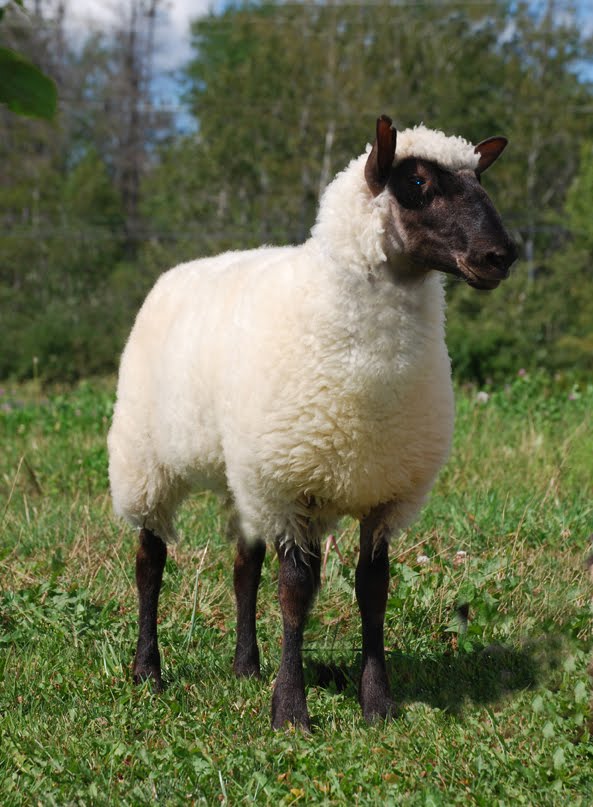
.clun forrest sheep

Clun Forest Clun Forest Sheep
For looks, this one's my favorite. Sheep grown for wool, traditionally fetch a higher price if the skin and whool are the same color though (despite how pretty this sheep is). This medium-sized 1000 year old breed comes from England but didn’t make it to American until the
70’s. Rams grow to 175-200 lbs and ewes to 130-160 lbs. Clun Forest sheep are adaptable and hardy, yield plenty of
milk, sweet meat, and a creamy white fleece. Twins are typical.  They thrive on just grass,
are disease- and parasite-resistant, and easy to keep. 
dreamstime_xs_28167519
Merinos
Multi-Purpose Merinos
Multi-purpose Merinos sheep are from Australia. They produce lean meat, high-quality wool and are
wrinkle-free, making them easy to sheer and to keep clean and bug-free. Since the skin is wrinkle-free, the hides are fine and easy to work with. It’s been compared to
the quality of Moroccan goat skin so the hides would be great for
clothing or for trading.
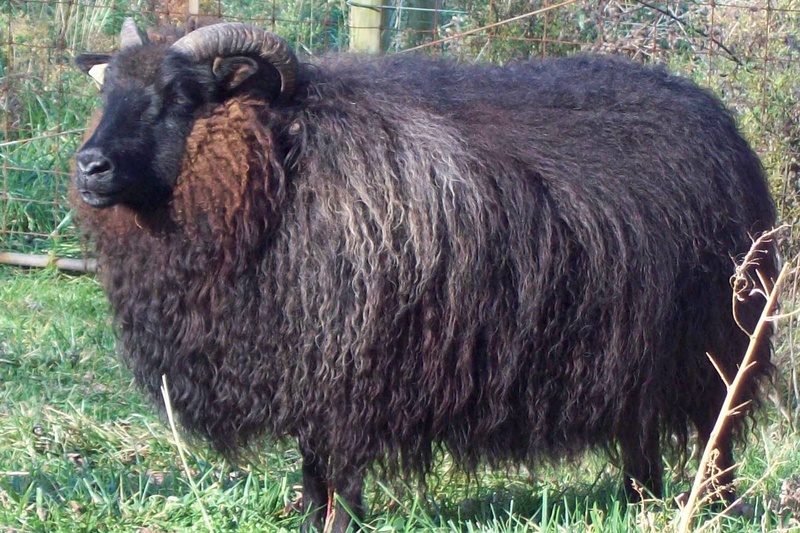
icelandic
Icelandic
Icelandic Sheep
Icelandic Sheep are centuries old and have remained unchanged for most of that time. They
were imported to Canada 1985, then to the USA in the 1990’s. Their double-layered coat that consists of an inner layer of soft, fine wool and an outer layer that's water-resistant, longer and courser,
growing as long as 15". The fleece is gray, black,  brown or patterned. The skin is thick enough to use for rugs but fine enough for clothing. The meat is lean and sweet. The milk is gaining popularity for both drinking and cheese-making purposes. They’re short and stocky, with the rams weighing 180-220 lbs and ewes 130-160 lbs. The ewes are easy breeders, good mothers that typically produce hardy twins and sometimes triplets. They're also feed-efficient and generally easy to care for.

03cdfshropshire
Shropshire
Shropshire Sheep
Developed in England in the early 1800’s. Popular for their gentility, wool and hardiness. They can withstand wind, cold, sleet, and snow. The Shropshire sheep came to America in
the late 1800’s. Adult rams weigh 226-250 lbs and ewes 150-180 lbs. The wool is thick and luxurious. The meat is tasty. Ewes birth easily and typically live long lives. Called the "Ideal Farm Sheep," Shropshires were boasted to have "wool from the tip of the nose to the tip of the toes."

Racka sheep
Racka
 Racka
The Racka is a unique breed with both ewes and rams possessing long spiral shaped horns. The breed is of the Zackel type and originated in Hungary. The breed is used for milk, wool and meat production. Mature males may have horns as long as two feet or more. The minimum standard length is given as 50 cm (20 inches) for rams and 30 cm (12-15 inches) for ewes.

The cork-screw horns protrude almost straight upward from the top of the head. The Racka has been described as a hardy animal and is often used in crossbreeding due to its ability to pass this survivability to its offspring. The breeds unique appearance and quiet disposition would make it a desirable animal for hobby situations.

Rambouillet ewes
Rambouillet
Rambouillet
The Rambouillet is the "backbone" of the American Sheep Industry, forming the foundation of most western range flocks and raised throughout the United States. The Rambouillet descends entirely from the Spanish Merino. In fact, it is the French version of the Merino developed when Louis XVI imported 386 Spanish Merinos in 1786 for his estate at Rambouillet.

Though named for the town in France, the breed owes much of its development to Germany and the United States. The Rambouillet is a dual purpose sheep, producing a desirable carcass and good fine wool. Rambouillets are large sized, rugged and long-lived with a strong flocking instinct. Rambouillet ewes possess many desirable traits which have resulted in their inclusion in crossbreeding programs to improve lamb production.


Source:
http://www.sheep101.info/
http://www.survivopedia.com/survivors-guide-raising-multi-purpose-sheep/

4/14/2013

Duck vs Chicken for Egg Laying

Duck vs Chicken Egg
I've always loved chickens and ducks, even as a child. My neighbor had both and was kind enough to allow me to try and hatch an egg. It didn't pan out. We lost power and the eggy died. A few months later, mom and dad were kind enough to surprise me with 4 ducklings for Easter. I raised and released them never giving a thought to collecting their eggs for food (that's for chickens, right?....wrong!).  Funny thing is, the ducks I raised were actually bred for egg laying (the Khaki Cambell duck).
Duck vs Chicken Yolk
So what's the benefit of having a duck egg laying flock vs chicken egg laying? My first thought was surely chickens lay a lot more eggs, but nope, the some ducks bred for egg laying can produce just about as much.

Duck vs Chicken Egg Taste
Duck eggs tend to have a larger yolk and lower water content. Supposedly makes cakes and pastries fluffier. It's more difficult to make meringue with duck egg whites. The eggs tend to be firmer, in general, when cooked up. Duck eggs tend to be a fair bit larger (filling up the palm of your hand).

Duck vs Chicken Egg Shelf Life
Due to thicker shell, a duck egg has up to a 6 week shelf life vs ?? for a chicken egg.

Duck vs Chicken Egg Nutritional Difference
  • duck eggs are alkaline, chicken eggs are acidic
  • 6x the Vitamin D
  • 2x the Vitamin A
  • 2x the cholesterol
  • 75% the Vitamin E
  • Morere Vitamin K2
  • higher in calories
  • higher omega-3 fatty acids
  • yolks are darker, yellower, indicating a higher nutrient density
  • 100 gm of duck egg = 185 KCal of energy vs 149 KCal for chicken
  • slightly  higher amounts of selenium, manganese, zinc, copper, potassium, sodium, phosphorus, calcium and iron
  • slightly higher amount of thiamin, niacin, riboflavin, pantothenic acid, folate, vitamin B6, vitamin D, vitamin E, vitamin A, vitamin B12 and retinol.
  • 100 gm of duck eggs = 3.68 gm of saturated fat vs 3.1 gm in chicken
  • 50% higher monounsaturated fat
  • slightly higher amino acids: threonine, isoleucine, trytophan, leucine, methionine, lysine, cystine, tyrosine, phenylalanine, valine, serine, glycine, proline, aspartic acid, histidine, alanine, and arginine. 
  • 100 gm of duck eggs = 884 mg of cholesterol vs 425 mg in chicken

Good Duck Laying Breeds


  • Indian Runners: Skiddish, quiet, small, don't fly, interesting upright posture, not a good meat bird, greenish white egg, don't need water to swim in 
    Indian Runner Duck

    Indian Runner Duck Bluish Green Eggs
    Indian Runner Ducks

    Indian Runner Ducklings
  • Khaki Campbells: Pretty, highest egg production of any duck or chicken breed 
    Khaki Cambell Ducks

    Khaki Cambell Ducklings
  • Pekin: ideal meat bird that's also pretty good egg layer 
    Pekin Duckling

    Pekin Duck
  • Black Cayuga: Pretty beetle green bird lays an interesting black egg (100-150 eggs per year)
    Black Cayuga Duck Egg

    Black Cayuga Duck
    Black Cayuga Duckling

5/03/2009

More About The Baby Chicks


Found out the 2 new babies we brought home from Ed's Pet World were 3 weeks old and came from a teacher who had hatched several chicks for a classroom project. Explains why the babies seem so traumatized. We still can't seem to make them as friendly as the original 4, although I think if I feed the black fiesty one enough worms, he may warm up to me a bit. He's always best friends with me for about three minutes after worm time. For the record, feeding baby chicks worms, is about the cutest thing I've ever seen. One will grab it, start peeping in this weird way, and running as fast as possible in circles around the brood with his prize. All the other babies will start chasing the one with the worm. Life's simple pleasures.

The original 4 are now 14 days old while the 2 new ones (and smaller ones, strangely enough) are 25 days old.

Peepers (the one using only one leg) is still , eh hem, only using one leg, but using it much better! She's starting to flap her wings a little bit (the others started flapping well over a week ago and some are almost flying outright). Once she gets good use of her wings, she'll probably be in much better shape with just her one leg. The joint isn't swollen anymore, mostly b/c she's just so good at using the one leg that she doesn't lean/limp on the other one anymore. Definitely starting to look like she'll never use that leg, but she seems happy. She's still very small compared to the one's she hatched with, but she's about the same size as the new black one (Beej). They're buddies, it seems. They snuggle. It's soo sweet. She was the loner before now.

Since the babies are getting pretty big, and I still don't have their coop ready, I've been leaving the door open to their brood (the large dog carrier w/ a light) so they can run out for a few minutes a day. At first, none of them ever left the brood even if I left the door open. I started to think, I could have stuck a lamp on a mat, and that would have worked fine for these babies. Eventually all of them, except Peepers started venturing out a bit though. But today, Peepers came out.

I keep trying to take each one outside (outside, outside) to explore, individually, but they mostly just seem scared, uninterested,.... and scared. Maybe they need to all go out together to stay brave, but I'm too scared for that :). We have a viscous cat in the neighborhood. Pebbles was out today when Normal (the cat) came creeping up. Usually Pebbles isn't afraid of me, but when I saw Normal and immediately threw my hands out to scoop up Pebbles, of course, Pebbles starting screeching and fleeing me (towards Normal of course). That was a little scary. Lesson learned: Don't act afraid around a chicken unless you want the chicken to be afraid too. They pick up on those things.