This disease seems to be spreading across the garden and killing indiscriminately (tomatoes, peppers, beans, ...). The picture below is exactly what it looks like (with tiny orange dots below the ground) and kills the plant completely and quickly. As soon as you notice you have it, the plant is dead, if it's a small plant. A giant productive tomato plant takes a few days to kill. Major bummer.
What's the cause??
8/21/2010
8/01/2010
Nice Quote and Art
| Looking Down Yosemite Valley,California 1865 by Albert Bierstadt onn Display At Birmingham Museum Of Art |
"Above all things, lose no occasion of exercising your dispositions to be grateful, to be generous, to be charitable, to be humane, to be true, just, firm, orderly, courageous, &c. Consider every act of this kind, as an exercise which will strengthen your moral faculties and increase your worth." - Thomas Jefferson
11/22/2009
Crop Rotation Concepts
If you are a home gardener, then chances are you won't want to always be growing the same exact vegetable, year after year. Then why not take advantage of the ancient practice of crop rotation?
Practically every gardener has heard of this (probably something they were taught in middle school history class, like me). But do they really know what it means? If they know anything on the subject, it's probably that pest problems can be reduced by consecutively planting vegetables from different families, but there's more to it.
1st there are several benefits to crop rotation:
1. Growing multiple varieties of plants at once is more maintainable by fewer people (the small farmer or avid gardener), because the plants needs are timed differently. All plants don't need to be planted or harvested at once.
2. Improved soil structure: root depth and dug in plants at end of harvest change soil structure in various ways
3. Improved soil nutrition: some plants add nutrients, others move nutrients around, and others just consume nutrients
4. Improved disease, weed, and insect control
5. Reduced dependence on expensive pesticides and fertilisers
6. Reduces soil erosion
7. Unexplained benefits: Some plants just simply grow better following other crops and the reasons aren't completely understood
2nd, it's important to know the plant families:
3rd, there are several aspects to consider with crop rotation:
2.GREEN MANURE:
3. COMPOSTING:
4. PLANT SEQUENCING IS IMPORTANT:
Practically every gardener has heard of this (probably something they were taught in middle school history class, like me). But do they really know what it means? If they know anything on the subject, it's probably that pest problems can be reduced by consecutively planting vegetables from different families, but there's more to it.
1st there are several benefits to crop rotation:
1. Growing multiple varieties of plants at once is more maintainable by fewer people (the small farmer or avid gardener), because the plants needs are timed differently. All plants don't need to be planted or harvested at once.
2. Improved soil structure: root depth and dug in plants at end of harvest change soil structure in various ways
3. Improved soil nutrition: some plants add nutrients, others move nutrients around, and others just consume nutrients
4. Improved disease, weed, and insect control
5. Reduced dependence on expensive pesticides and fertilisers
6. Reduces soil erosion
7. Unexplained benefits: Some plants just simply grow better following other crops and the reasons aren't completely understood
2nd, it's important to know the plant families:
| Family | Common names |
| MUST HAVE ROTATION | |
| Crucifer (Brassica) | Arugula, bok choy (petchay), broccoli, brussels sprouts, cabbage, cauliflower, collards, kale, kohlrabi, mustard, radish, rutubaga, turnip, watercress |
| Solanaceous (Nightshade) | Eggplant, potato, pepper, tomato |
| KEEN ON ROTATION (excluding leeks) | |
| Allium | Chive, garlic, leek, onion, shallot |
| Umbelliferae | Carrot, celery, cilantro, dill, fennil, parsnip, parsley |
| LESS FUSSY | |
| Aster (Daisy) | Artichoke, chamomile, calendula, dandelion, echinacea, endive, lettuce, marigold, sunflowers, tarragon |
| Chenopodiaceae | Beets, chard, spinach |
| Cucurbit (Gourd) | Gourds, cucumber, pumpkins, squash, zucchini |
| Legume | Beans, peas, clover, peanut, soy |
| Poaceae (Grasses) | Barley, corn, millet, oat, rice, rye, sorghum, sugarcanem wheat |
| ??? | |
| Convolvulaceae | Cassava, sweet potato, taro, water chestnut, yam |
| Malvaceae (Mallow) | Cocoa, cotton, okra |
| Tetragoniaceae | New Zealand Spinach |
| Valerianaceae | Mache |
3rd, there are several aspects to consider with crop rotation:
- Stretch it out over as many years as possible with as many different vegetables are possible
- This becomes easier the larger your garden is and the more parcels you can divide it into
2.GREEN MANURE:
- Rotating in a green manure is beneficial
- Examples: mustard greens, legumes, clover, vetch, alfalfa, buckwheat, oats, rye-grass, barley
3. COMPOSTING:
- some prefer same year composting
- others prefer prior year composting
- when composting is scarce, green manure can be substituted
- manuring helps offset (but not necessarily eliminate) the damages of negative preceding crops)
4. PLANT SEQUENCING IS IMPORTANT:
- Peas and beans are considered "nitrogen fixing", "green manure" adding good structure and nitrogen to the soil (nature's fertiliser). Most plants perform well after it, especially corn since it's a heavy nitrogen feeder.
- Negative preceding crop: Most plants don't like being planted after carrots, cabbage, beets, or chard
- Deep rooted plants: assist in pulling nutrients from deep in the soil up into shallow sections of the soil. They tend to assist in breaking up compacted deep soil.
Shallow rooted plants: benefit from being planted after deep rooted plants. - Corn, peas, and beans don't suffer the same effects after negative preceding crops.
- Corn and brassicas are heavy nitrogen feeders
- Brassicas don't perform well in loose soil and tend to pack the soil.
- Potatoes tend to loosen the soil. They don't like lime.
- Brassicas and legumes like lime.
- Peas and beans like being planted in loose soil.
- Onions are happy to be planted in firm soil.
- Potatoes perform well after corn.
- Cleaner crops - perform well against weeds. So well in fact, they reduce weeds for the subsequent crop planting. Examples include potatoes, sweet potatoes, and squash.
- Root crops perform well following "cleaner crops" since they aren't good competitors with weeds
- Tomatoes prefer to not rotate in that they like to always be grown where tomatoes have grown before. Doesn't mean they don't benefit from a cover crop in the winter or lots of compost though.
Great Gardening Book(s)
In a previous post, I have already recommended Eliot Coleman's book, Four-Season Harvest. And while it was insightful, it's predecessor, The New Organic Grower, is inspiring. It might not be for everyone, but would be great for the following people:
- anyone dreaming of providing home grown vegatables for their family's needs, year-round
- the would-be small multi-vegetable organic farmer (around 10 acres)
- the person interested in understanding the science and/or reasoning behind what works and what doesn't work with organic vegetable growing
- the organic gardener interested in learning something that could benefit them
This is the writer's website: http://www.fourseasonfarm.com/. He has been a great inspiration to me.
9/13/2009
Breakfast
We had a spend the night wedding weekend for about 40 folks. Since people were waking up at all times, we decided to go for a temperature insensitive breakfast: homemade sweet breads and muffins. Mmmmm. 


8/31/2009
Wedding Festivities
Since the wedding is a weekend long event, there will be some festivities...entertainment... A few musically inclined people are coming, so we'll be playing a little guitar around the campfire. Dad likes and wants karaoke, so he's in charge of that.
There's a rather large creek, lots of board and card games, and a canoeing company a mile upstream. There will be lots of cooking on the grill and a few kegs of homebrew.
http://terrapinlodge.net/activities.htm has more information about canoeing.
Below are just a few additional ideas:
There's a rather large creek, lots of board and card games, and a canoeing company a mile upstream. There will be lots of cooking on the grill and a few kegs of homebrew.
http://terrapinlodge.net/activities.htm has more information about canoeing.
Below are just a few additional ideas:
Guitar around the camp fire:![]() | Frisbee:![]() |
Horseshoes:![]() | Darts:![]() |
Croquet:![]() | Badminton:![]() |
8/26/2009
Seed Storage Tips
Plants that self pollinate are the easiest to collect seeds from and replant. Examples of this type plant: non-hybrid tomatoes, peppers, peas, endive, chicory, lettuce (somewhat) and beans.If a plant freely cross pollinates or requires cross pollination and has another same species/different variety plant nearby, then the offspring is likely to be untrue to parent unless special precautions are made during the growing season. Examples of this type plant: corn, squash, zucchini, eggplant (most plants fall into this category).
The following tips are intended for the collection of "pure-blooded" aka "Open Pollinated" seeds:
- Allow the seeds to mature fully on the plant. Usually this means allowing the fruit/vegetable to over-ripen or possibly even dry out (depends on the plant).
- Separate seed from vegetable where applicable
- Allow seeds to dry at room temperature in a low humidity preferably breezy environment for approximately one week. A screen works nicely for this, particularly with a nearby fan or in the shade outside where covered from rain.
- Remove any remaining non-seed matter. Sometimes it's as simple as picking the seeds out by hand. Other times, not. Examples of helpful tools and methods:
- Winnow - Sheet of paper-bent into u-shape. Blow non-seed matter off with your mouth or with a hair dryer on low at an angle. This works great with basil.<

- Sieve - Old window screen or wire mesh screen. Sift the matter to separate seed from non-seed
- http://www.seedsofchange.com/ has similar type professional tools:

- Package seeds. Don't forget to label and date them. Here are a couple of free downloadable seed packet designs:
Cute little seed packet
design #1Cute little seed packet
design #2 - Once the seeds are dried and packaged, place them in an air tight container that blocks out all light. Add a silica pack to keep things dry. You can save silica packs from old vitamins or order them online. Silica packs have to be replaced every 6 months but can be recharged by microwaving for 3-5 minutes or backing at 275 F for a couple hours. Mylar or foil lined bags inside a rigid container or a Ziplock freezer bag inside an opaque container.
- Seeds can be stored in the freezer if they are sufficiently dry (less than 8% moisture in the seed). If not, freezing will kill them. Refrigerator storage is a safe method for one year's storage. Crisper drawer is best (lower humidity). Typically, the cooler and drier a seed is kept, the longer the shelf life.

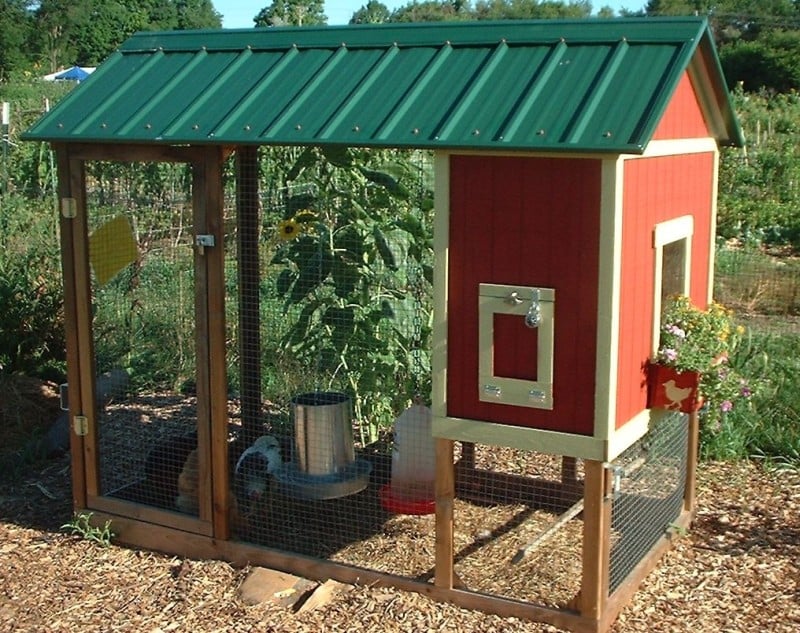
Cool Coop Designs
Ok, so I don't have chickens anymore. The neighborhood dogs won that contest. But I still can't help but obsess over chicken coop designs every now and then.
This coop is what I tried to model mine after (I failed miserably, you can't even tell the relation, still working out mind-over-matter). I got the idea from Backyard Chickens: http://www.backyardchickens.com/coops/images/playhouse-coop-2.jpg

This one's also from backyard chickens: http://www.backyardchickens.com/web/viewblog.php?id=16313-maurice-chicken-coop-car and is just too clever & creative for words.
This is just a photographer person's personal coop (I believe it's personal) at http://jodieotte.com/?tag=americauna
These coops are from design sponge: http://www.designspongeonline.com/2009/11/coop-homes.html?utm_source=rss&utm_medium=rss&utm_campaign=coop-homes


This coop's prebuilt and can be purchased from http://moderncoops.weebly.com/index.html. It's a bit pricey at $525, but it's cute.
This coop is what I tried to model mine after (I failed miserably, you can't even tell the relation, still working out mind-over-matter). I got the idea from Backyard Chickens: http://www.backyardchickens.com/coops/images/playhouse-coop-2.jpg

This one's also from backyard chickens: http://www.backyardchickens.com/web/viewblog.php?id=16313-maurice-chicken-coop-car and is just too clever & creative for words.

This is just a photographer person's personal coop (I believe it's personal) at http://jodieotte.com/?tag=americauna
These coops are from design sponge: http://www.designspongeonline.com/2009/11/coop-homes.html?utm_source=rss&utm_medium=rss&utm_campaign=coop-homes


This coop's prebuilt and can be purchased from http://moderncoops.weebly.com/index.html. It's a bit pricey at $525, but it's cute.

8/23/2009
Wedding Meals
We're actually having two dinners (and a lunch) since folks are spending the night Friday & Saturday. The lodge has these great outdoor grills (2 of them), so we're going to basically keep a fire going the whole weekend. Friday night we'll grill hens. Still trying to work out the side dishes. Hoping Gramma will make her German potato salad.
Mark's mom agreed to bring lots of bread type foodies for breakfast. Saturday for lunch we'll use leftover chicken to make chicken & chicken salad sandwiches.
Saturday for dinner, a whole lamb will be cooked. For those that can't stomach lamb, there will be a little beef brisquet too. Again, side dishes? Maybe a giant plate of rice and salad.

Here's the actual menu:
FRIDAY NIGHT:
-Herb Grilled Hen
-German Potato Salad
-???
SATURDAY BREAKFAST:
-Muffins, Cereal, Sweet Breads
-Rice Pudding
SATURDAY LUNCH
-Chicken Sandwiches
-Chicken Salad Sandwiches
-Chips
SATURDAY DINNER
-Lamb over bed of rice
-Salad
SUNDAY BREAKFAST
-You're on your own. Probably some leftover cereal and pastries
8/10/2009
Flowers & Bouquets
8/05/2009
Rustic Wedding Decor Ideas
- I only wish I knew the name of this flower:


- Old wood makes nice rustic signage

- Antique cake stands are beautiful (and hard to come by). Old wine crates could also work
- Twine strung with old family photos
- Random drink dispensers: galvanized buckets, glass urns, a wooden canoe, old milk jugs, mason jar serving glasses,...

- Lighting: mason jar tea candles, table lamps (already at the lodge), strung lighting

- Fall like decorative items: pumpkins, corn stalks, fruits (lemons, limes, apples)


8/02/2009
Asparagus - Part II
You definitely have to be patient with Asparagus. It's now August afer initially planting my roots in March. I had sworn off buying asparagus roots ever again, because none of my roots had surfaced by early May. I was sure they were all duds. But then in late May and early June, they all started to slowly sprout up. Before too long, all but 1 had sprouted out of 18 planted. Not too shabby.
Towards the end of July we decided to change homes. I figured the asparagus was still small, and I would try to transplant them to a new home. Put the roots (and small stalks) in a bucket with hardly any dirt. I had every intention of replanting them in their new home right away. "Right away" turned into a couple of weeks with no water. The plants all appeared dead. I was fairly certain they were, but replanted them anyway. They have since all ALL resprouted. I may have set back the maximum productive capabilities, but they're alive!
This is truly a miracle vegetabe, in my honest opinion.
Towards the end of July we decided to change homes. I figured the asparagus was still small, and I would try to transplant them to a new home. Put the roots (and small stalks) in a bucket with hardly any dirt. I had every intention of replanting them in their new home right away. "Right away" turned into a couple of weeks with no water. The plants all appeared dead. I was fairly certain they were, but replanted them anyway. They have since all ALL resprouted. I may have set back the maximum productive capabilities, but they're alive!
This is truly a miracle vegetabe, in my honest opinion.
Growing Vegetables From Seed - Part II

Several plants in our garden were grown from seed this year. Some with better results than others.
The successful veggies were corn, tomatoe, oka, squash and gourds. Corn we started straight in the ground and it grew without any effort very quickly. It produced the yummiest corn I've ever had straight off the plant uncooked (you have to eat it right after you pick it though). We planted two varieties of okra, one grew great and the other not so much. Tomatoes were everywhere.
The unsuccessful veggies were lettuce, beets, and radishes. The lettuce grew, it just tasted awful and bitter. The weather was too hot for these guys, and we should have planted them much sooner. While the beets that grew performed well, there was a huge mortality rate with these little rascals (about 75%). They don't handle transplanting at a young age too well, and they didn't grow too vigorously to begin with. Once we got them larger, they seemed very hardy though. Will have to research this plant a bit more and keep trying because it's greens are great in the hot summer (when the lettuce plants go bitter). I keep hearing how easy radishes are to grow, and yet we never grew any roots. This has happened both years we've tried to grow radishes.
Don't you just love squash flowers? I've heard of gourmet restaurants that take the flowers and fill them with brie, then batter in tempura, and deep fry.
Our squash and gourd plants went crazy. We didn't even plant any gourds on purpose, they just didn't die in our compost last Halloween, and when we spread out the compost, they started growing everywhere. We thinned them down to a few, but the few grew the best of any plant in our garden.
Check out the visitor in our compost
Here's a
complete list of the vegetables grown in our garden this year.
Subscribe to:
Posts (Atom)